Poetry can sometimes feel difficult, especially when the words are old or symbolic. One such poem is The Echoing Green by William Blake. Many learners find it confusing at first, but once it is explained in simple language, it becomes very interesting and meaningful.
In this article, you will learn the echoing green stanza explanation in a clear and easy way. Each stanza will be explained step by step so that anyone can understand it without difficulty. This topic is important because it helps improve reading skills, understanding of poetry, and exam performance.
The explanation will also connect the poem to real life, so the meaning feels natural and not just theoretical.
Understanding the Poem in Simple Words
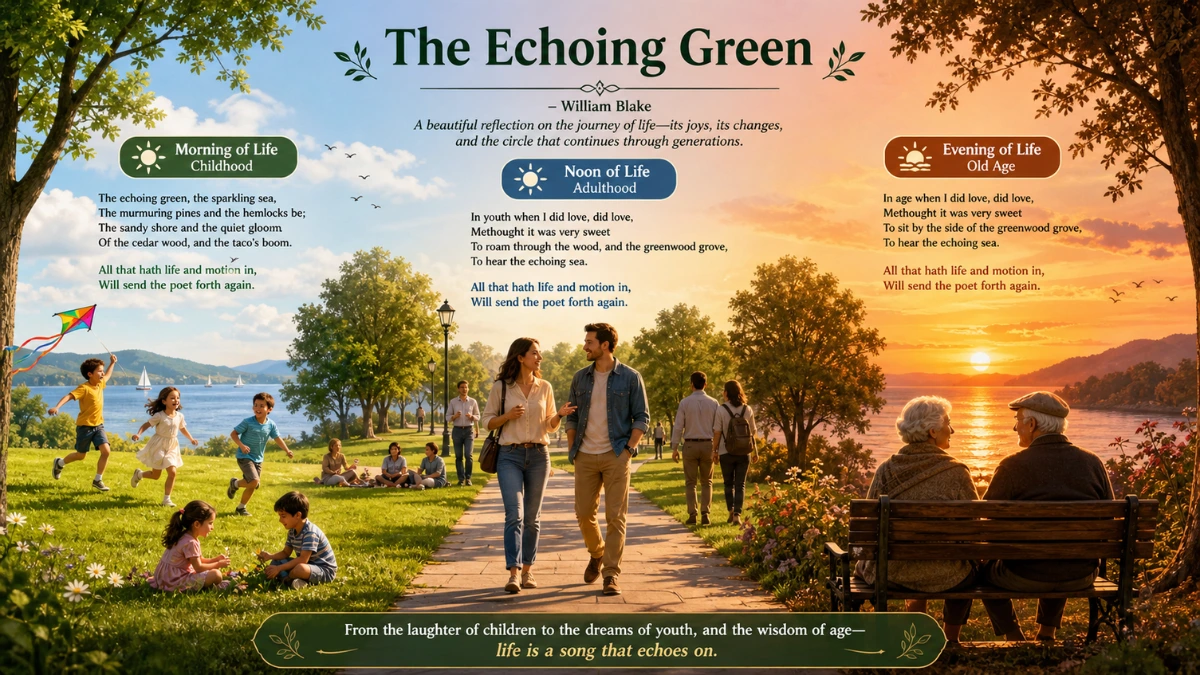
The Echoing Green is a poem about life stages. It shows how people move from childhood to old age. The poem has three stanzas, and each stanza represents a different part of life.
- First stanza → Morning (childhood)
- Second stanza → Afternoon (adulthood)
- Third stanza → Evening (old age)
The “green” in the poem is a place where people gather, play, and enjoy life.
First Stanza Explanation (Childhood and Joy)
The first stanza describes a fresh morning scene. The sun rises, and everything feels alive. Birds are singing, and children come out to play.
In simple words, this stanza shows:
- Happiness
- Energy
- Beginning of life
Children are laughing and playing on the green field. Their voices make the place “echo,” which means the sound spreads everywhere.
At the same time, old people sit nearby and watch the children. They remember their own childhood and feel happy.
Main Idea of Stanza 1
Life begins with joy, innocence, and freedom.
Second Stanza Explanation (Middle Life and Reflection)
In the second stanza, the mood changes slightly. The old people start talking about their past. They say that they also played like these children when they were young.
This shows:
- Passage of time
- Memories of youth
- Connection between generations
Children are still playing happily, but now we see life from another angle. Adults and old people are reflecting on their past.
Main Idea of Stanza 2
Life moves forward, and people start remembering their younger days.
Third Stanza Explanation (Old Age and Ending of Life)
The third stanza becomes quieter and a bit sad. The sun is setting, and the children stop playing.
They return home, and the green field becomes silent.
This represents:
- Old age
- End of energy
- Quietness
Just like the day ends, human life also comes to an end. The “echoing green” becomes the “darkening green,” showing the change from happiness to silence.
Main Idea of Stanza 3
Life ends peacefully, but the energy and joy fade away.
Detailed Step-by-Step Understanding
To fully understand the echoing green stanza explanation, it helps to look at how the poem connects nature with human life.
| Element in Poem | Meaning in Real Life |
| Morning | Childhood |
| Noon/Afternoon | Youth/Adult life |
| Evening | Old age |
| Playing children | Energy and innocence |
| Old people | Experience and memory |
| Sunset | End of life |
This comparison makes the poem easy to understand. It is not just about a park or children playing—it is about the full journey of life.
Themes of the Poem
1. Cycle of Life
- The poem shows that life has stages. Everyone starts young and grows old.
2. Joy of Childhood
The first stanza highlights how carefree and happy childhood is.
3. Memory and Reflection
Older people remember their past and connect with the present.
4. Passage of Time
Time moves continuously, and nothing stays the same.
Real-Life Understanding
This poem connects closely to everyday life.
For example:
- In the morning, children go to school happily.
- Adults go to work during the day.
- Older people spend time resting and remembering the past.
These stages match the poem’s idea of morning, afternoon, and evening.
Common Confusions in Understanding
Many learners get confused about certain points in this poem. Let’s clear them.
| Confusion | Correct Understanding |
| “Echoing Green” means only sound | It also represents life and activity |
| Poem is only about children | It is about all stages of life |
| Ending is negative | It shows a natural and peaceful end |
| Old people are sad | They are reflective, not unhappy |
Common Mistakes Table
| Wrong Understanding | Correct Understanding | Explanation |
| The poem is only about a playground | It is about life stages | The green is symbolic |
| Only children are important | All age groups matter | Old people represent wisdom |
| Ending is depressing | Ending is natural | It shows life cycle |
| Echo means noise only | Echo means lively environment | It shows energy of life |
| Sunset is just time | Sunset means old age | It represents ending |
Real-Life Usage in Writing and Exams
Understanding the echoing green stanza explanation helps in many ways.
In exams:
- You can write better answers about themes and meanings.
- You can explain symbolism clearly.
- You can give examples from daily life.
In writing:
- You can describe life stages more creatively.
- You can use simple comparisons like morning and evening.
Example Answer Style
If asked to explain the poem, a good answer could be:
- “The poem shows the journey of human life through the image of a day. Morning represents childhood, afternoon shows adulthood, and evening represents old age. The poet uses simple natural scenes to explain deep ideas about life.”
Practical Application (Real Student Usage)
This topic is not just for exams. It also helps improve thinking and understanding.
For example:
- When writing essays about life, you can use this idea of stages.
- When explaining a story, you can compare characters with life phases.
- In comprehension questions, you can identify hidden meanings.
Real-Life Scenario
Imagine a park in the evening:
- Children are playing loudly.
- Adults are walking.
- Old people are sitting quietly.
This is exactly what the poem describes.
Summary of Key Points
| Topic | Simple Explanation |
| Poem Idea | Life journey |
| First Stanza | Childhood happiness |
| Second Stanza | Memory and reflection |
| Third Stanza | Old age and ending |
| Main Theme | Cycle of life |
- Read More: How to Change Narration in English – Complete Step-by-Step Guide with Easy Rules and Example
Conclusion
Understanding the echoing green stanza explanation becomes easy when it is connected to real life. The poem is simple but meaningful. It teaches that life moves in stages, just like a day moves from morning to evening.
The joy of childhood, the reflection of adulthood, and the calmness of old age are all natural parts of life. Instead of seeing the ending as sad, it should be understood as a peaceful completion of life’s journey.
With regular reading and practice, poetry like this becomes easier and more enjoyable.
Frequently Asked Questions (FAQs)
What is the main idea of The Echoing Green?
The main idea is the cycle of life from childhood to old age.
Why is the green called “echoing”?
Because it is full of children’s voices and activity.
What does the sunset represent?
It represents the end of life or old age.
Are old people sad in the poem?
No, they are remembering their past with peace.
Why is this poem important?
It teaches about life stages and helps understand poetry deeply.